


Therapeutic Technology
Our hospital provides leading-edge technology – as well as therapists trained to use it best – to ensure our patients are positioned to recover as quickly as possible.
Innovative Solutions for Superior Outcomes
New technology continues to push the boundaries of what was once considered full recovery from certain injuries or conditions. Today, for instance, top inpatient rehabilitation facilities deploy robotic tools that give stroke patients the ability to use their upper extremities again or help spinal cord injury patients with early ambulation.
University Hospitals Rehabilitation Hospital provides leading-edge technology – as well as therapists trained to use it best – to ensure our patients are positioned to recover as quickly as possible.
Here are some examples of some of the industry’s best technology deployed at our hospital:
Ekso
The Ekso exoskeletal unit assists patients with early ambulation following a stroke or spinal cord injury. Ekso is a robotic exoskeleton that can be fitted to most patients to allow them to stand and ambulate early in the rehab process, which is key to their long-term prognosis. Clinical evidence indicates that gait training in the Ekso improves patients’ balance, walking distance, and gait speed outside of the device at discharge compared to admission.

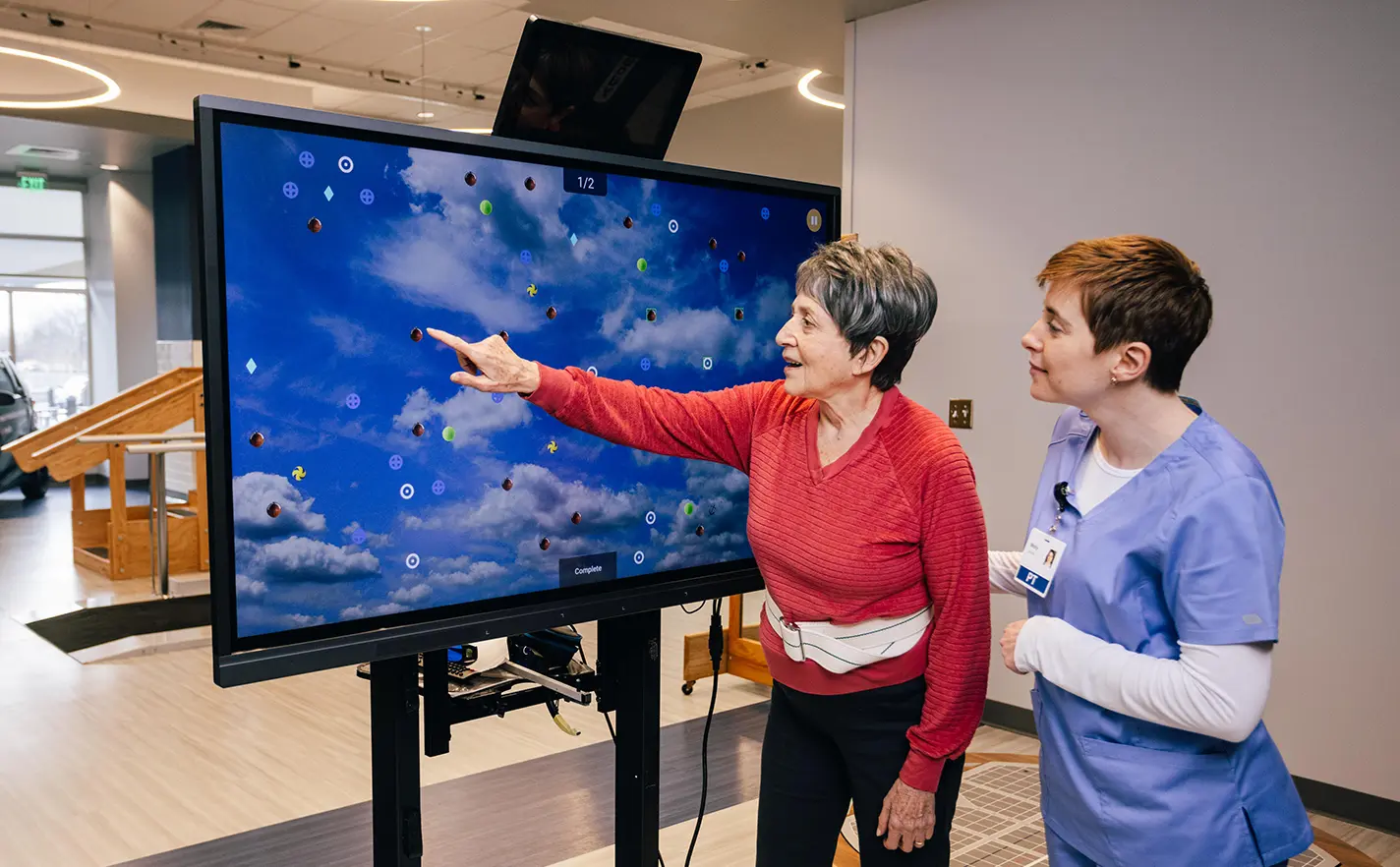
Senaptec Sensory Station
The Senaptec Sensory Station is a state-of-the-art sensory evaluation and training station that assesses ten visual and sensorimotor skills. The technology measures and trains an individual's strengths and opportunities to improve sensory performance. The Senaptec Sensory Station is a software solution that provides a comprehensive sensory evaluation and training to maximize performance.
Overhead Body Weight Support System
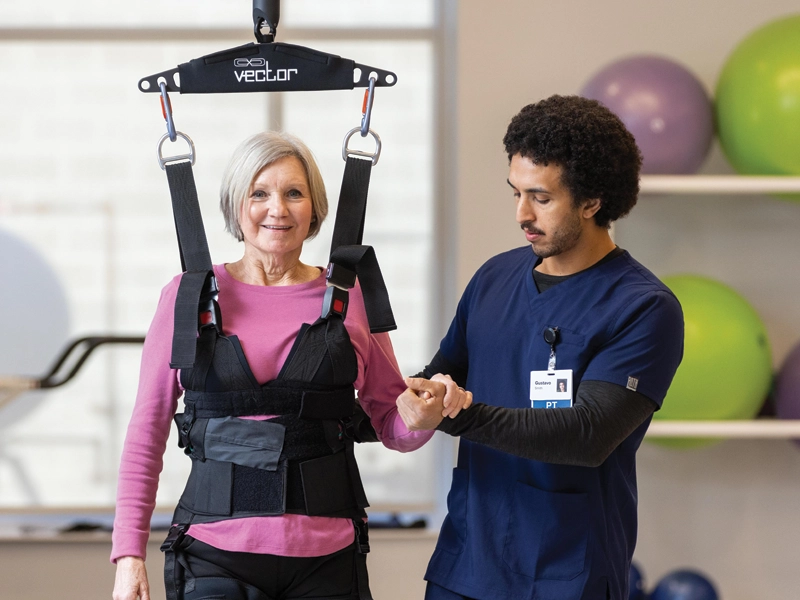
Our overhead body weight support system is a ceiling-mounted harness that automatically adjusts to a patient’s center of gravity during movement. It allows patients to safely experience a fall and recovery, helping them build comfort and confidence while performing a variety of activities with consistent body-weight support. This also enables therapists to concentrate on movement quality and overall mobility. The system supports patients across a wide range of mobility levels and can be used to treat conditions such as stroke, brain injury, spinal cord injury, Parkinson’s disease, and orthopedic injuries.
Biodex Gait TrainerTM
Biodex Gait Trainer™ is a treadmill-based rehabilitation system designed to help patients improve walking speed, endurance, and step symmetry. It provides real-time biofeedback and controlled gait training programs to support safe, progressive recovery. Therapists can adjust settings such as speed and step length while offering hands-on guidance as needed to help patients develop proper gait patterns. The system promotes repetition and consistency in training, helping patients build strength, coordination, and confidence as they regain independent mobility.
InMotionARM™ Robot
The InMotionARM™ Robot is often used with many patients who suffer from weakness in their upper extremities after a stroke. The ARM Robot helps patients utilize their strength to complete hundreds of repetitions in a fraction of the time of traditional exercise. Repetition is one of the most important factors when considering neuroplasticity and the brain’s ability to repair and relearn movements following a stroke. This evidence-based neurorehabilitation technology quietly monitors the patient’s movements during therapy while gently assisting where needed to help them complete various motor therapy activities.

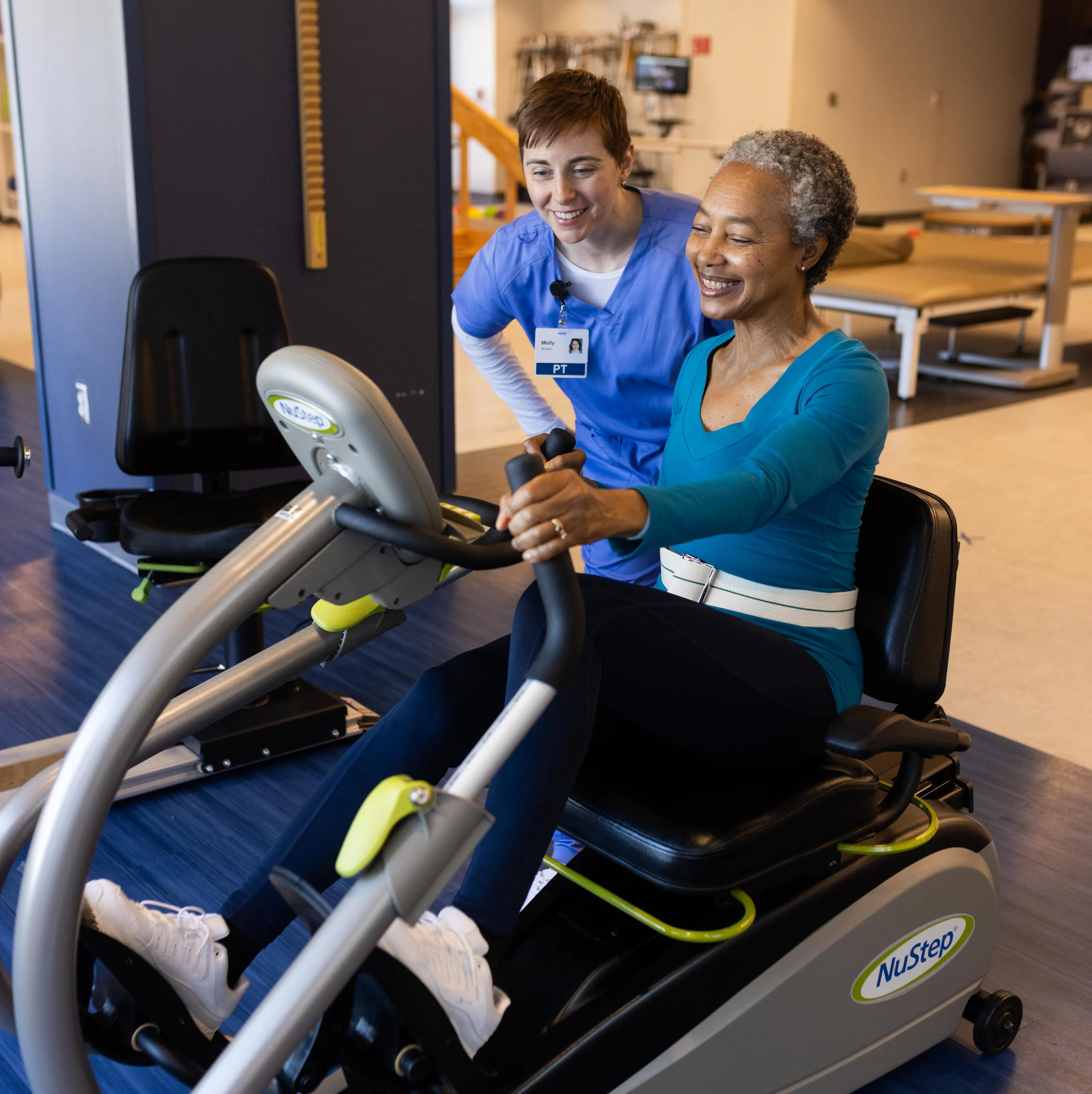
NuStep Recumbent Cross Trainer
A recumbent cross trainer that sets an unparalleled standard for total body exercise in a comfortable seated position.
- Works all major muscle groups and gives an effective cardiovascular workout
- Allows a patient to move arms and legs in a single, dependent motion that stimulates walking with the added benefit of resistance training